Follow us on Facebook
Breaking updates in your feed — tap to open
The Future of Intelligent Smartphone Technology. We are experiencing a radical transformation in the capabilities of our smartphones. They are no longer mere communication devices or pocket computers but are intelligent companions who predict our needs. Three key players, Google with Gemini, Apple with Apple Intelligence, and Samsung with Gauss are driving this transformation. Having tried and tested each flagship smartphone when it launches, I have experienced myself the power of these AI integrations which are transforming our lives, including the way we capture photos through the phone, and the way we conduct our day-to-day activities. The fight now is no longer over hardware specifications but which ecosystem can bring the most practical artificial intelligence advantages to the common user like yourself and me.

The Transformation of Essential Smartphone Features by AI
Firstly, the most obvious change is camera processing. No matter what phone you have, it be it an iPhone, a Samsung Galaxy, or a Google Pixel, AI now runs invisibly behind the scenes to transform pictures into something fantastic. The art of night mode photography has developed beyond a mere aspect of brightening to a smart scene analysis, capable of differentiating a city and a campfire. Portrait mode introduced using AI is characterized by highly complicated depth maps that distinguish subjects and backdrops with astonishing precision.
- Voice assistants nowadays can dialogue with you, knowing when to suggest going to the store or when to play on your favorite station.
- Predictive functionality can learn how you like to do things, like whether you drive or prefer to take Metro in the morning or take the Express way in the evening.
- It can learn whether you listen to music on the commute or read a book or newspaper instead.
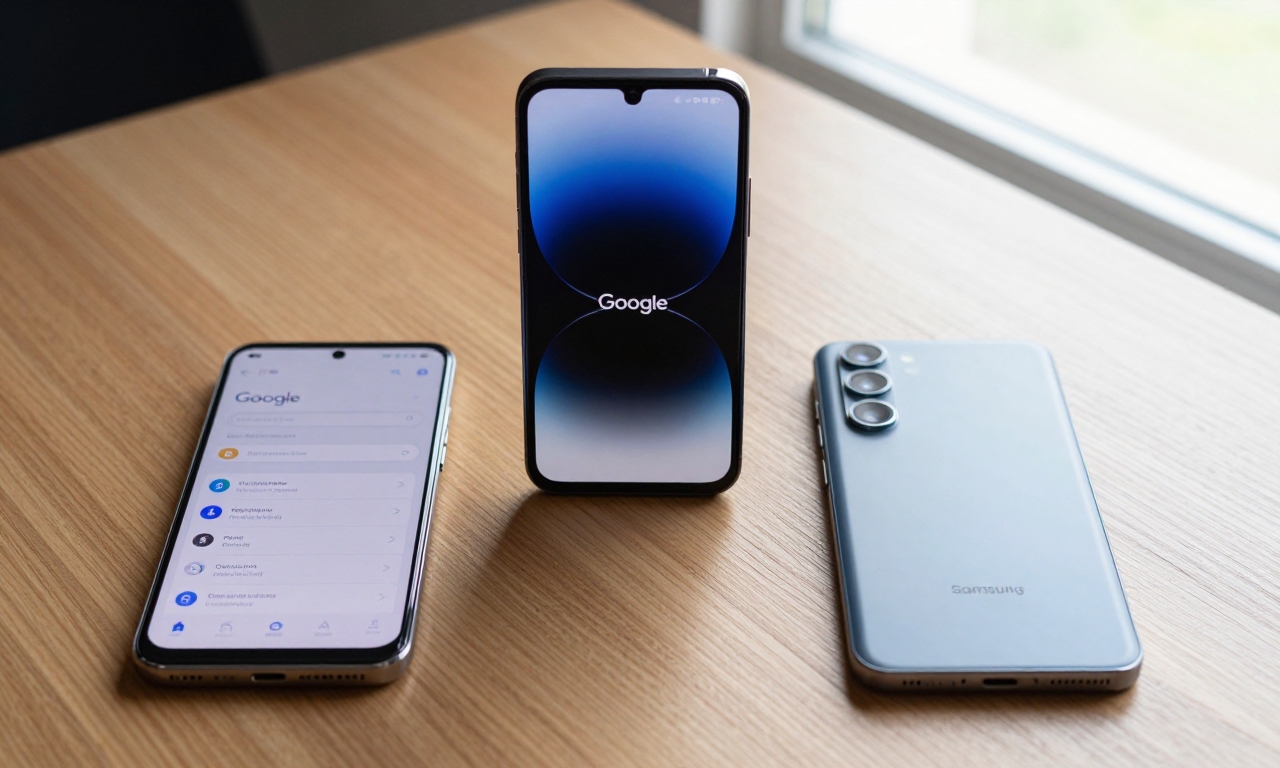
Comparison of the Three AI Approaches
Both companies have proceeded in different directions in their AI deployment.
| Feature | What it enables | Best for | Notes / limits |
|---|---|---|---|
| Gemini (Google) | Interpretating natural language requests and delivering useful information between applications. | Android and Pixel phone users who appreciate Google services. | Uses extensive search data and machine learning of Google. |
| Apple Intelligence | More contextual Siri able to do more complicated tasks within the Apple ecosystem. | Users extremely committed to the Apple ecosystem (iPhone, iPad, Apple Watch). | Focused on on-device computing and privacy. |
| Samsung Gauss | Embedding camera upgrades and productivity features closely. | Samsung Galaxy owners. | Often embeds AI into the Samsung keyboard and gallery apps. |
When I contrast these solutions in my review of smartphones, it becomes evident that there is not one best solution, and various users will have their favorite philosophies.
In the Age of AI, Privacy Matters
This leads to the important issue of privacy and security. Where does that information go when your smartphone is constantly reading your behavior?
- Most AI operations done on your iPhone, as opposed to the cloud, is the way Apple attempts to tackle numerous privacy concerns, but it requires some expensive hardware.
- Google provides additional cloud-based AI solutions, which are potentially more efficient but which cast doubt on a privacy invasion.
- Samsung is midway between, with some operation both on- and in-the-cloud.
These implications to privacy must be weighed against other factors as we select which ecosystem provides the most viable benefits of AI, particularly when it comes to sensitive information in our productivity apps or health data in our wearables.
Real-world Goods to Everyday Uses
The thing is that beyond the technical specifics, these AI features make our everyday smartphone life better.
- In the case of students who capture notes using tablets, AI has the ability to arrange and generalize information automatically.
- Predictive features can recommend translation applications or currency converters to travelers even before you can think that you need them.
- AI battery optimization gets to know your patterns of use to optimize your charge across the day.
- Simple activities such as writing emails or messages are made quicker with AI-aided writing tools.
I have been able to test many gadgets and wearables, and in my experience the AI features that are most useful do not have to be the most flashy ones; they are the ones that come in quietly and enable your smartphone to get a little more useful without having you think about them.
Choosing Your AI Ecosystem
Which approach is the most practical?
- In case you are extremely committed to the Apple ecosystem, i.e. having an iPhone, iPad, and perhaps an Apple Watch, Apple Intelligence offers excellent integration with all your devices.
- As Android users who appreciate Google services, Gemini will improve their experience in a natural way.
- The improvements in the camera and the productivity features created by Gauss are available to Samsung Galaxy owners.
The fact is that all three are developing at a fast pace, and the distance separating them fades with each software version. The important thing is in selecting the ecosystem that suits your current setup of devices, privacy settings, and how you actually use your smartphone, be it as a tool of mobile photography, gigaplay, or a workstation.
The Future of AI in Our Pockets
In the future, the AI phone war has only started. The direction we are heading towards is of smartphones that are not only responsive but predict and pre-empt needs even before we express them. The use of smartphones, tablets, wearables, and smart home devices will be smarter and seamless. These technologies are going to keep on changing not only how we will use our gadgets, but also how we will engage with the world. Not who has won the AI race, but how these rival methods will drive each other to innovate better, more constructive experiences to all of us who cannot live without these extraordinary devices, day in, day out.