Follow us on Facebook
Breaking updates in your feed — tap to open
With smartwatches and fitness trackers making it seem like a commonplace accessory, these devices glean an astounding number of personal health indicators. Modern wearables can record not only heart rate variability and sleep habits, but also the level of oxygen in the blood and the electrocardiogram, previously only accessible to medical experts. This technological innovation brings to the fore fundamental issues of ownership and control of data. Once you are wearing an Apple Watch and Fitbit, you might think that the data is yours, but the legal and practical aspects are more complicated. Everyone who cares about privacy in a rapidly networked world has to understand these nuances.
- Legal Environment of Health Data Ownership
- The nature of data gathered also differs considerably with the various wearable platforms
- During the process of exploring privacy options on these sites, one realizes that there is a networked maze of permissions and sharing features
- Access to Your Health Information by Companies
- It takes more than mere act of putting on a device to protect your health data
- Data Protection Practical Scenarios
- Data policies must be an important factor to the consumers in making their purchasing decisions, but features and price are equally important
Legal Environment of Health Data Ownership
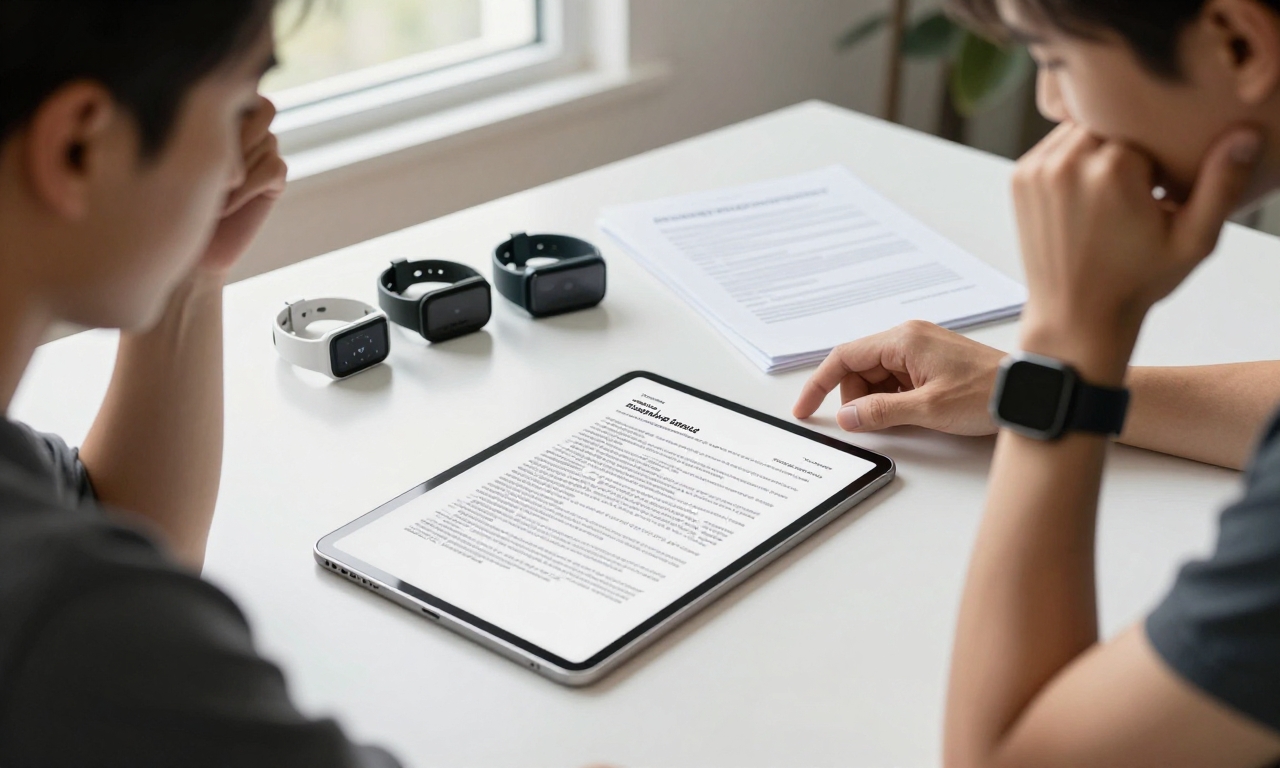
The majority of users will be shocked to find out that they often do not own the raw data gathered by wearable devices. Rather, corporations such as Apple, Google, and Fitbit usually provide users an authorization to get access to and utilize their own data; however, companies maintain wider rights. This arrangement is entrenched in long contracts of services that hardly anybody reads carefully. Such documents frequently contain provisions that give companies the right to cluster and anonymise data to conduct research, product development and even to share them with third parties. This difference between personal and licensed access to data is especially relevant when it comes to how this data can be utilized in a healthcare institution or during insurance evaluation.
The nature of data gathered also differs considerably with the various wearable platforms
- Apple Watch on watchOS pays more attention to all-encompassing health indicators such as the fall alert, irregular heartbeat warnings, and the ability to track the menstrual period.
- Fitbit devices have an excellent activity tracking ability and sleep tracking.
- Garmin watches provide more serious performance data to athletes.
The companies have varying privacy policies and sharing practices in their approach to data collection. Others emphasize the retention of data on the machine itself, whilst others depend significantly on the cloud store. This basic architectural divergence also impacts both user control of personal information and security.
During the process of exploring privacy options on these sites, one realizes that there is a networked maze of permissions and sharing features
A lot of wearables automatically upload data to companion applications and cloud services, producing multiples of sensitive data. Data trail may also be complicated by third-party applications related to these platforms. Although the companies usually integrate strong security protocols, the distributed character of this ecosystem increases the potential vulnerability points. Users need to take charge of permissions and be aware of data flows to where, and this is a task that requires consistent attention as apps change and policies are modified.

Access to Your Health Information by Companies
The business models in the wearable industry largely rely on the commercial utility of aggregated health data. Firms use trends among millions of users to enhance algorithms, work on new features, and make experiences more customized. This pooled data assists in training machine learning models that enable many things like more precise calorie burning estimates to early warning signs of possible future health problems. Although this data is anonymized, the sheer amount of data presents valuable datasets that are of immense commercial and research utility far beyond the gains of individual users.
In addition to product development, wearable data has found its way into the insurance and healthcare industries. There are increasing cases of health providers including data received by approved wearables into patient monitoring programs and insurance companies investigating usage-based wellness programs. These advances have eroded the distinct between consumer electronics and medical devices, and cast doubt on regulatory controls and information security levels. The FDA has started certifying some wearable functions as medical devices, which is accompanied by more examination but also sets explicit data management rules in that particular setting.
It takes more than mere act of putting on a device to protect your health data
- Begin by updating privacy preferences in both the companion app and third-party applications that your wearable is connected to.
- Turn off extraneous data sharing capabilities and restrict background data gathering where feasible.
- Periodically review the applications that require access to your health information and end services you no longer use.
- Opting to use local storage opportunities when cloud sync is available instead of automatic cloud synchronization, though it can also restrain some features.
They won’t get rid of all data collection but will greatly decrease your online presence.
Data Protection Practical Scenarios
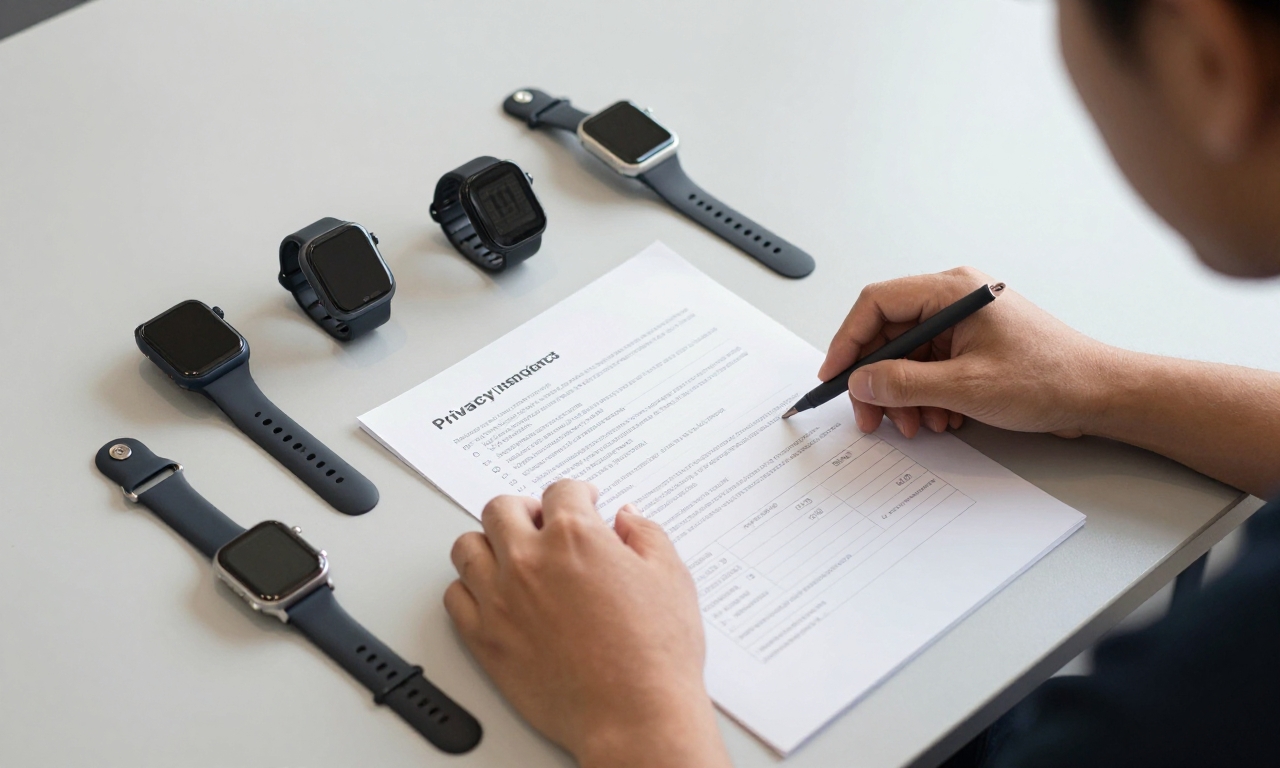
Depending on the jurisdiction, the legal rights of your health data may be different, but typically allow access, correction, and deletion rights under such regulations as GDPR and other state laws. A majority of the wearable firms offer the option to download your information, request corrections, or delete the account altogether. Nevertheless, the real-world application of those rights can be tedious, and the erased data can be stored in backup devices over a long time. It is also notable how the aggregated data in an anonymized format will generally not be subject to such a personal right, so your data might still be used to draw large trends regardless of a personal request to delete it.
More regulation and standardization are likely to be important in the future of wearable health data. With increased integration of these devices into formal healthcare systems, there will be an increasing pressure on more explicit ownership schemes and enhanced privacy. Other proponents suggest the establishment of personal health data banks where individuals have control over access authorisations. Such technological solutions as differential privacy and in-device processing can also reverse the balance in favor of user control. Such developments have the potential to turn wearables into not just a data collection device, but a real personal health assistant that puts individual sovereignty before information.
Data policies must be an important factor to the consumers in making their purchasing decisions, but features and price are equally important
| Feature | What it enables | Best for | Notes / limits |
|---|---|---|---|
| Data retention policies | Control over how long data is stored | Privacy-conscious users | Varies by platform; check terms |
| Sharing controls | Limit third-party access | Minimizing data exposure | May affect app functionality |
| User controls | Manage permissions and settings | Active privacy management | Requires regular updates |
| On-device processing | Reduces cloud dependency | Enhanced security and battery life | May limit advanced features |
Compare the data retention, sharing and user controls of various wearable platforms. Find clear privacy policies that are written with understandable words as opposed to legal terms. Ask yourself about the use of a platform that does data processing mostly on the device as opposed to cloud-based analysis. These differences not only impact privacy, but also battery life and performance, which results in trade-offs that every user is required to consider according to their own priorities and risk profile.
The bottom line is that wearing health information is an intermediate zone between individual property and business asset. Although the insights that these devices bring are of great benefit to users, they also cede much power to the use and distribution of their information. The existing framework has placed much faith on business to deal with sensitive information in a responsible manner. As wearables are developed further and further as a way of improved medical tracking, the need to design straightforward ownership structures and enhanced privacy protection will become more of an emergency. In the meantime, the informed users who actively you can adjust their privacy settings to a fair balance between the benefits of wearing technology and the privacy of personal health data.