Follow us on Facebook
Breaking updates in your feed — tap to open
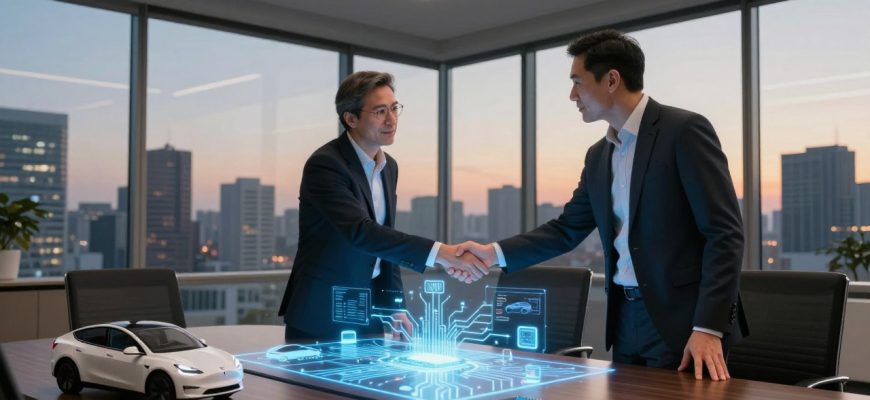
Tesla’s announcement of an eight-year, $16.5 billion contract with Samsung to supply artificial intelligence chips represents more than just another corporate partnership-it signals a fundamental strategic shift in how the electric vehicle pioneer approaches computing power for its most ambitious projects. While Tesla revolutionized automotive manufacturing with affordable electric vehicles and over-the-air software updates, its autonomous driving ambitions have faced significant technical hurdles. This massive semiconductor agreement could provide the computational foundation needed to overcome those challenges, but success will require more than just hardware.
- The Semiconductor Strategy: Reducing Dependence on Nvidia and AMD
- Geopolitical Implications and the Texas Tech Hub
- Technical Challenges: Tesla’s Autonomous Driving Approach
- The Data Problem and Computational Requirements
- Beyond Automotive: Humanoid Robots and Broader AI Applications
- The Innovation Model: From Spectacle to Substance
- Competitive Landscape and Industry Implications
- Timeline and Implementation Challenges
- Conclusion: A Pivot Point for Tesla’s AI Ambitions
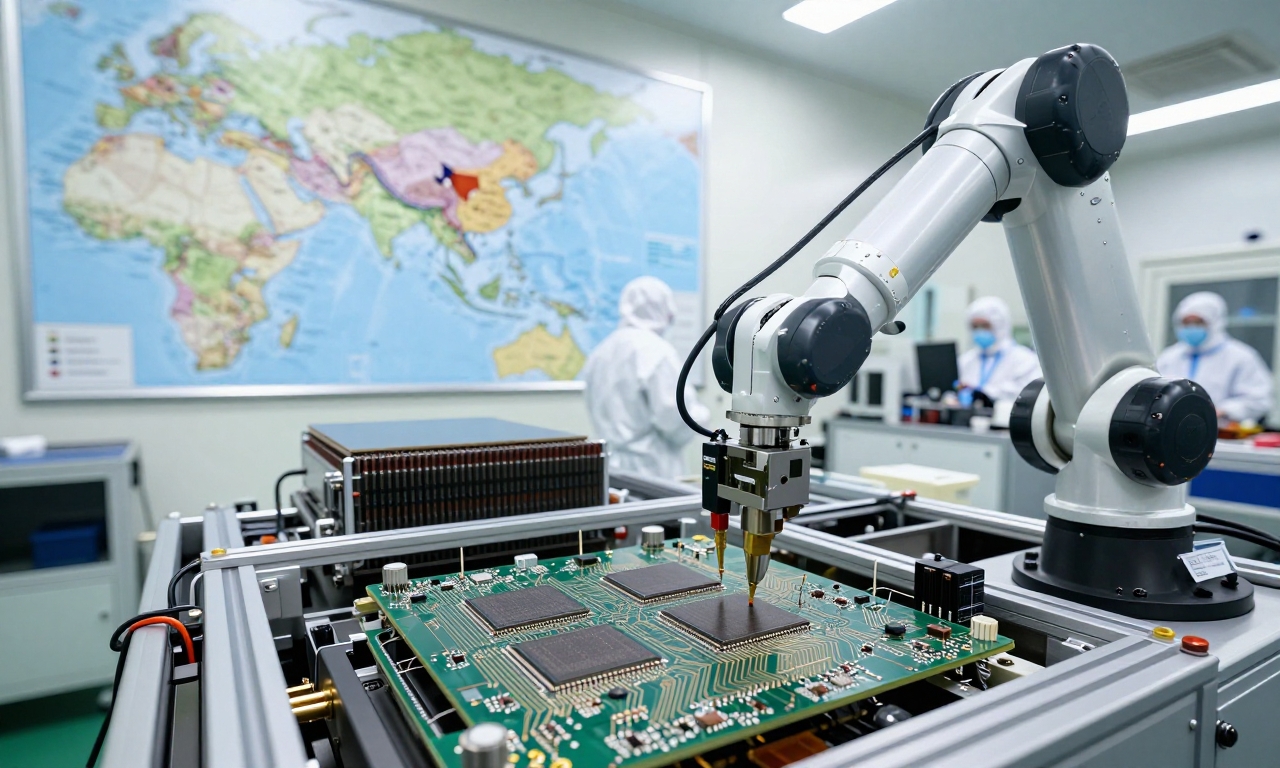
The Semiconductor Strategy: Reducing Dependence on Nvidia and AMD
For years, Tesla has relied heavily on Nvidia and AMD processors to power its Autopilot and Full Self-Driving systems. This dependence created both technical and strategic vulnerabilities. Technically, Tesla’s camera-based neural network approach requires immense computing power that must be optimized specifically for automotive applications. Strategically, relying on external suppliers for critical components limits Tesla’s ability to innovate at the pace required for true autonomous driving.
The Samsung deal represents a classic vertical integration move, bringing semiconductor design and manufacturing closer to Tesla’s core operations. At 7.6% of Samsung’s projected 2024 revenue, this isn’t a minor supply agreement-it’s a transformative partnership that will activate Samsung’s Texas chip foundry, which had previously faced delays and financial challenges. The timing is particularly notable given the geopolitical context of semiconductor manufacturing.
Geopolitical Implications and the Texas Tech Hub
Paradoxically, this deal between Tesla and Samsung benefits from Biden administration subsidies under the Chips and Science Act-funding that supports Elon Musk, a vocal critic of the current administration. This irony highlights the complex intersection of technology, politics, and industrial policy in today’s semiconductor landscape.
The agreement supports broader efforts to diversify semiconductor production outside Asia, positioning Texas as an emerging technology hub. Samsung’s Texas facility, now revitalized by this massive contract, becomes a critical node in the North American semiconductor ecosystem. This geographic diversification isn’t just about supply chain resilience-it’s about creating regional innovation clusters where hardware and software development can occur in closer proximity.
Technical Challenges: Tesla’s Autonomous Driving Approach
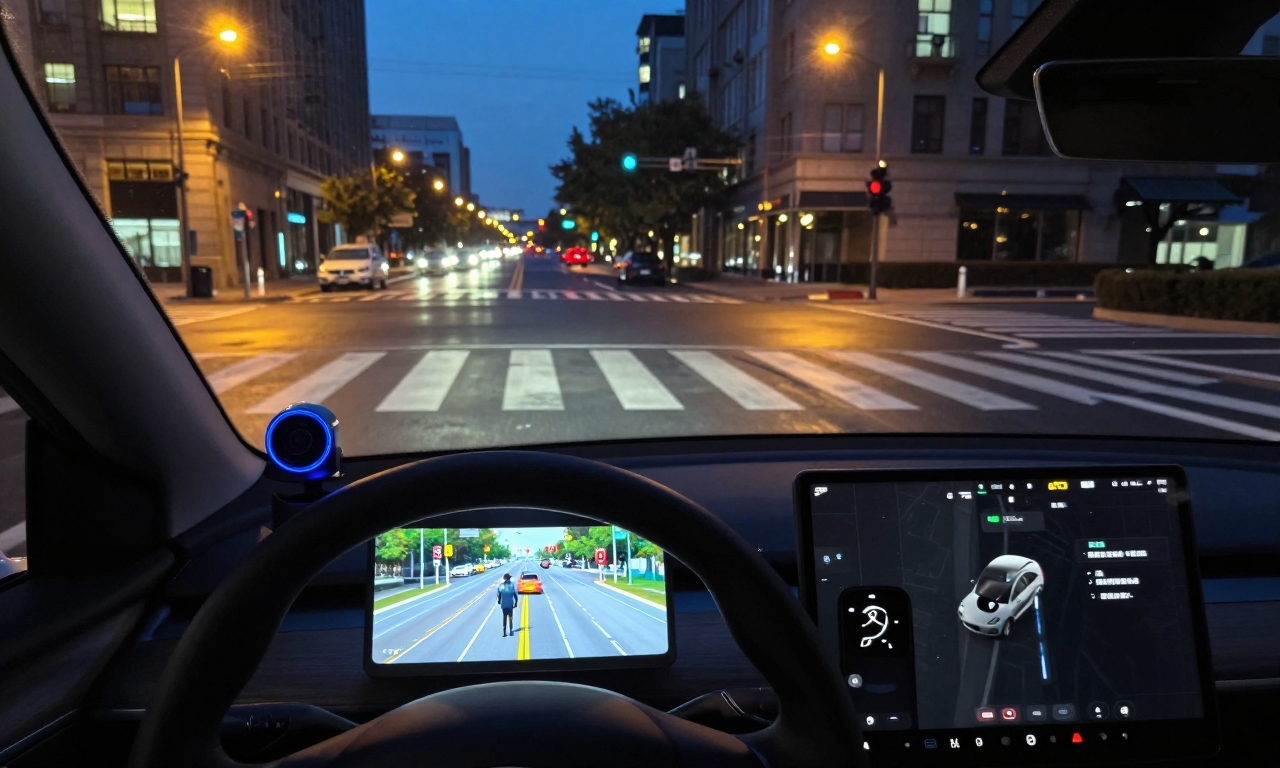
Tesla’s Full Self-Driving system has remained controversial and, by most objective measures, unreliable in complex driving situations. While competitors like Waymo and Cruise have embraced LIDAR sensors and explicit rule-based systems, Tesla has doubled down on its camera-based, neural network approach. This methodology requires staggering amounts of data and computing power to train and operate effectively.
The new AI6 chips from Samsung could provide the technical leap Tesla needs. These specialized processors are designed specifically for artificial intelligence workloads, potentially offering significant performance improvements over general-purpose GPUs from Nvidia and AMD. However, hardware alone won’t solve Tesla’s autonomous driving challenges.
The Data Problem and Computational Requirements
Neural network-based autonomous systems require both massive datasets for training and powerful processors for real-time inference. Tesla’s fleet of vehicles provides unprecedented data collection capabilities, but processing and learning from this data has been computationally intensive. The Samsung chips could accelerate both training and inference, potentially closing the gap with competitors who use different technological approaches.
Yet the fundamental question remains: Can Tesla’s camera-only approach match or exceed the reliability of systems that incorporate LIDAR and other sensors? The answer may depend as much on software architecture and algorithmic innovation as on raw computing power.
Beyond Automotive: Humanoid Robots and Broader AI Applications
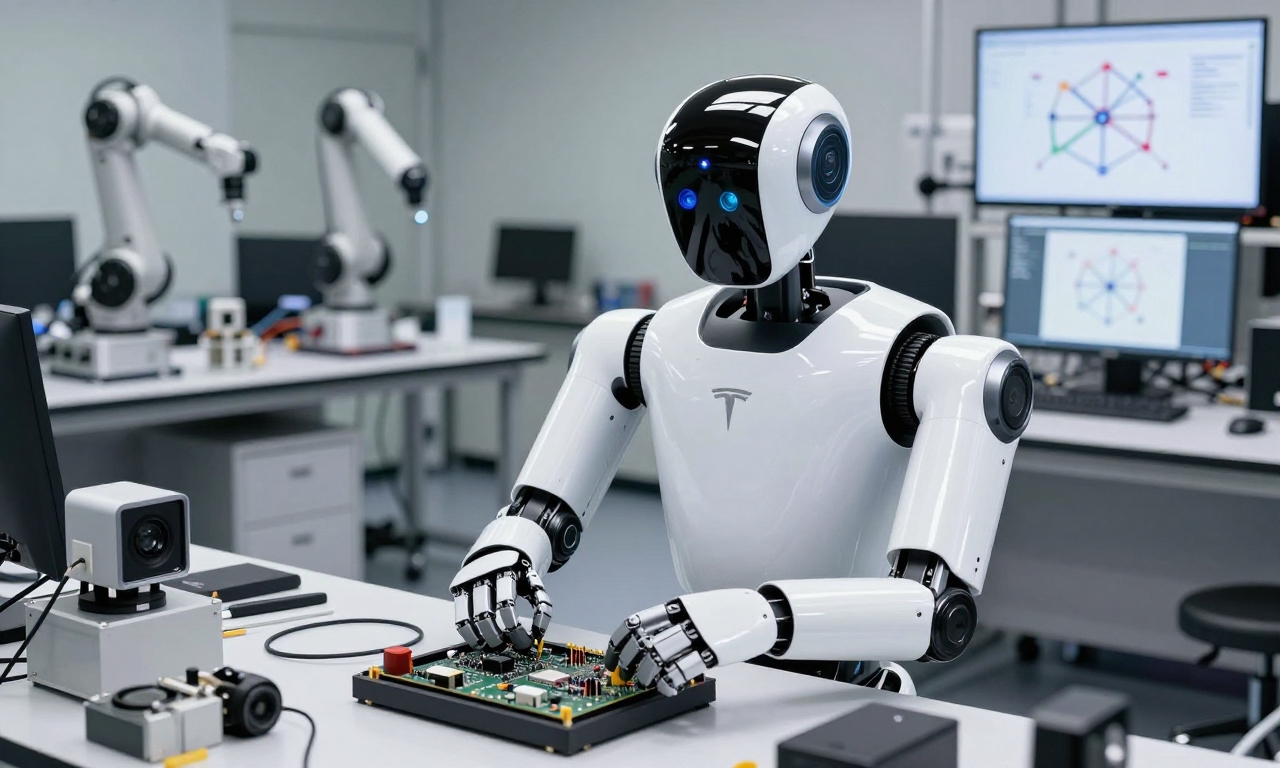
While much attention focuses on autonomous vehicles, Tesla’s Optimus humanoid robot project represents an equally ambitious application for these new AI chips. Humanoid robotics presents even more complex computational challenges than autonomous driving, requiring real-time processing of multimodal sensor data, complex motion planning, and sophisticated human-robot interaction capabilities.
The Samsung partnership suggests Tesla is thinking beyond automotive applications to a broader AI strategy. The same computational architecture that powers autonomous vehicles could potentially be adapted for robotics, creating synergies across Tesla’s product portfolio. This approach mirrors strategies employed by other technology giants but with Tesla’s distinctive focus on physical world applications.
The Innovation Model: From Spectacle to Substance
Tesla’s success with this semiconductor strategy depends on more than technical specifications. The company must shift from what critics describe as a data-heavy, spectacle-driven approach to a focused, accountable innovation model. Past Tesla announcements have sometimes prioritized dramatic reveals over substantive technological progress, creating skepticism about the company’s ability to deliver on its most ambitious promises.
The Samsung deal represents an opportunity to rebuild credibility through tangible technological advancement. By focusing on measurable improvements in autonomous driving performance and demonstrating real progress in robotics, Tesla could revive its narrative as an AI leader rather than a company distracted by political controversies and marketing spectacles.
Competitive Landscape and Industry Implications
Tesla’s move comes as the entire automotive industry accelerates its transition toward software-defined vehicles. Traditional automakers are forming their own semiconductor partnerships, while tech companies like Apple continue to explore automotive opportunities. The Samsung deal positions Tesla uniquely in this evolving landscape-not just as a vehicle manufacturer but as an integrated hardware and software company.
The implications extend beyond Tesla. If successful, this vertical integration model could pressure other automakers to deepen their semiconductor partnerships or develop in-house capabilities. It could also influence how AI hardware is designed, with greater emphasis on automotive and robotics applications rather than general-purpose computing.
Timeline and Implementation Challenges
An eight-year contract provides both stability and flexibility, but implementation won’t be without challenges. Semiconductor design and manufacturing involve long lead times and complex coordination between engineering teams. Tesla and Samsung must align their development roadmaps, ensure quality control at massive scale, and navigate the inevitable technical hurdles that arise in cutting-edge chip design.
Success will require sustained investment and patience-qualities that haven’t always characterized Tesla’s approach to new technologies. The true test will come not in announcement headlines but in gradual, measurable improvements to Tesla’s autonomous systems over the coming years.
Conclusion: A Pivot Point for Tesla’s AI Ambitions
Tesla’s $16.5 billion semiconductor agreement with Samsung represents more than a supply contract-it’s a strategic declaration of independence from traditional chip suppliers and a commitment to vertical integration in AI hardware. The success of this partnership will determine not just Tesla’s competitive position in autonomous driving but its broader ambitions in robotics and artificial intelligence.
The geopolitical dimensions add complexity, with Biden administration subsidies supporting a deal that benefits one of the administration’s most prominent critics. This irony underscores how industrial policy and technological innovation intersect in unpredictable ways.
Ultimately, the significance of this contract lies in its potential to refocus Tesla on tangible technological advancement rather than political distractions. If executed effectively, it could provide the computational foundation for breakthroughs in autonomous driving and robotics while positioning Texas as a new center of semiconductor innovation. The challenge now is turning strategic vision into technical reality-a task that will require focus, discipline, and sustained innovation over the eight-year lifespan of this transformative partnership.