Follow us on Facebook
Breaking updates in your feed — tap to open
Apple stands at a pivotal moment in technological history. While the company revolutionized smartphones and personal computing, its position in the artificial intelligence race appears increasingly precarious. Following the underwhelming launch of Apple Intelligence, the tech giant faces mounting pressure to deliver meaningful AI innovations that can compete with established players like ChatGPT, Google Gemini, and Anthropic’s Claude.
CEO Tim Cook has described AI as a revolution comparable to the internet or smartphones themselves, yet Apple’s initial offerings have been marked by delays and features that lag behind competitors. This gap has created what industry analysts call a “critical juncture” for Apple-the next year will determine whether the company can recover lost ground or risk being permanently sidelined in the AI revolution that’s reshaping how we interact with technology.
- The Siri Rebuild: Linwood and Glenwood Projects
- Project Linwood: Apple’s Homegrown Solution
- Project Glenwood: The Hybrid Approach
- Beyond Siri: Apple’s Multi-Pronged AI Strategy
- The AKI Team: Revolutionizing Search
- App Intents Framework: Toward Agentic AI
- The Challenges: Talent, Pace, and Infrastructure
- The Talent War
- The Innovation Pace Problem
- The Infrastructure Investment
- The Stakes: Apple’s Future in the AI Revolution
The Siri Rebuild: Linwood and Glenwood Projects
At the heart of Apple’s AI recovery plan lies a complete overhaul of Siri, the virtual assistant that once promised to revolutionize voice interaction but has since fallen behind more sophisticated AI systems. Apple is pursuing this transformation through two parallel development projects with distinct approaches to solving Siri’s limitations.
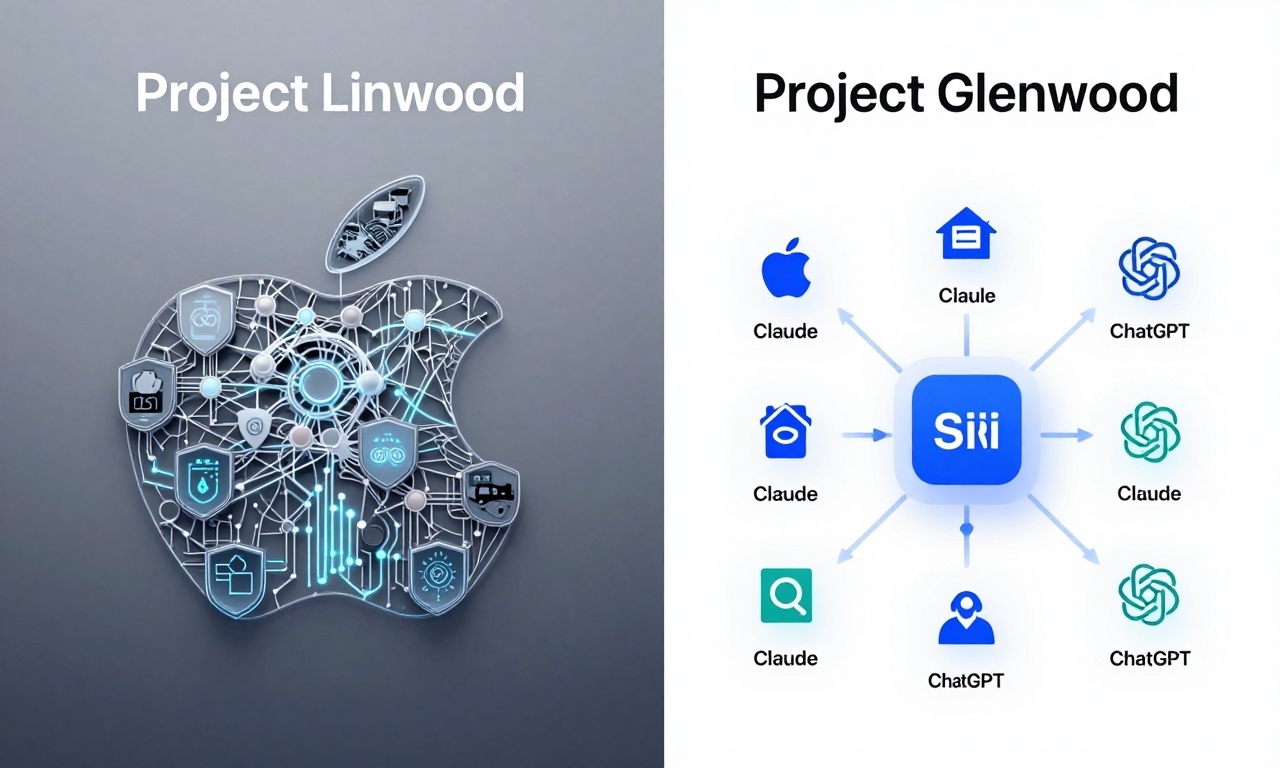
Project Linwood: Apple’s Homegrown Solution
Project Linwood represents Apple’s ambitious attempt to build an in-house large language model (LLM) from the ground up. Unlike systems that rely primarily on public internet data, Linwood is designed with a unique focus on understanding natural language while leveraging Apple’s vast repository of user data-all while maintaining the company’s legendary commitment to privacy.
This approach could give Apple a significant advantage in personalization. Imagine a virtual assistant that not only understands your requests but also knows your preferences, habits, and context based on your Apple ecosystem usage. However, building such a system presents enormous technical challenges, particularly in balancing sophisticated AI capabilities with Apple’s strict privacy standards that often limit data sharing between applications.
Project Glenwood: The Hybrid Approach
While Linwood represents Apple’s long-term vision, Project Glenwood takes a more pragmatic approach by integrating third-party AI models like Claude or ChatGPT into Siri’s architecture. This hybrid strategy could allow Apple to quickly bridge the capability gap while its proprietary systems mature.
Glenwood’s integration model raises interesting questions about Apple’s traditionally closed ecosystem philosophy. Would users prefer Siri powered by Apple’s exclusive technology, or would they value having access to multiple AI systems through a single interface? Industry sources suggest Apple aims to have a smarter, completely redesigned Siri ready by spring next year, though whether this will be powered primarily by Linwood, Glenwood, or a combination remains unclear.
Beyond Siri: Apple’s Multi-Pronged AI Strategy
Apple recognizes that simply improving Siri won’t be enough to compete in the generative AI landscape. The company is pursuing several complementary initiatives designed to embed AI throughout its ecosystem, from search capabilities to application control.
The AKI Team: Revolutionizing Search
Apple has formed a new internal division called the Answers, Knowledge and Information (AKI) team, tasked with developing an AI-powered answer engine. This technology aims to enhance search capabilities across Apple’s ecosystem-in Siri, Spotlight, and Safari-potentially challenging Google’s dominance in information retrieval.
The AKI project remains in early stages, but its potential implications are significant. An Apple-developed answer engine could provide more contextual, personalized responses than traditional search engines, drawing on the user’s device data while maintaining privacy through on-device processing. This could transform how iPhone and Mac users find information, moving from lists of links to direct answers generated by AI.
App Intents Framework: Toward Agentic AI
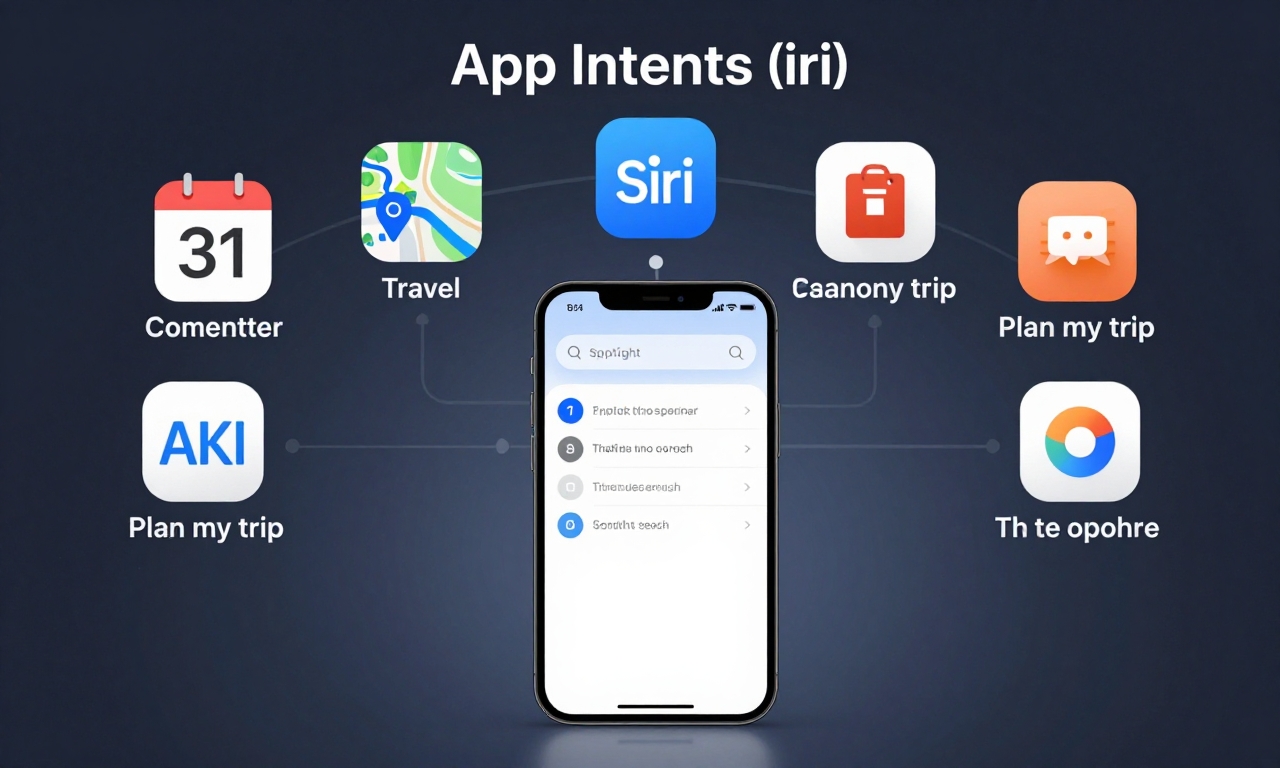
Perhaps the most ambitious aspect of Apple’s AI vision involves upgrading the App Intents framework to enable Siri to control applications through sophisticated voice commands. This represents a step toward what AI researchers call “agentic AI”-systems that can perform complex, multi-step tasks autonomously.
Imagine telling Siri, “Plan my weekend trip to Chicago,” and having it automatically check your calendar, search for flights, book accommodations, make restaurant reservations, and add events to your itinerary-all by interacting with various applications on your behalf. While this vision promises tremendous convenience, significant technical challenges remain in making such systems reliable enough for critical applications where errors could have serious consequences.
The Challenges: Talent, Pace, and Infrastructure
Despite Apple’s substantial resources and ambitious plans, the company faces significant hurdles in its quest to become an AI leader. These challenges span human resources, competitive dynamics, and technological infrastructure.
The Talent War
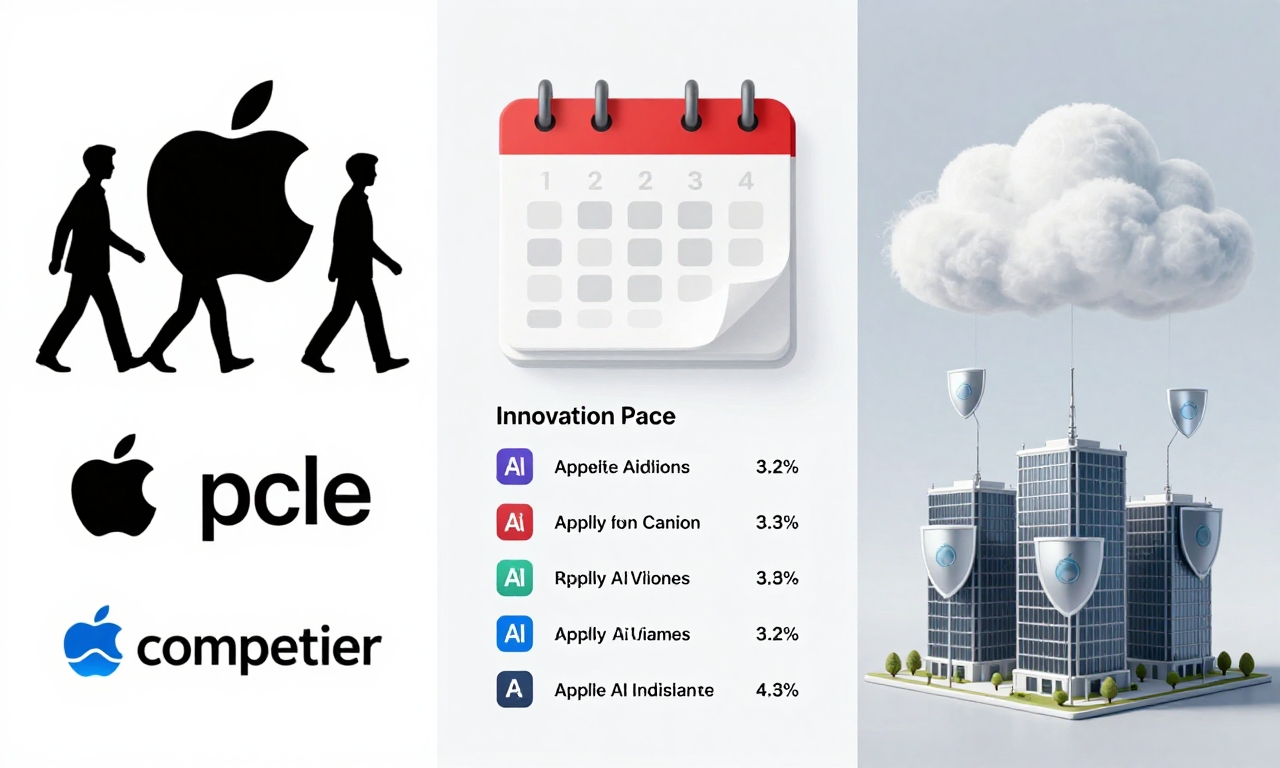
Apple has experienced notable attrition in its AI research teams, with key personnel departing for rivals like Meta and Google. This brain drain represents more than just lost expertise-it signals a potential cultural challenge within Apple’s traditionally hardware-focused organization. Can the company that perfected the iPhone adapt to the rapid iteration cycles and different skill sets required for cutting-edge AI development?
The competition for AI talent has become increasingly fierce, with salaries for top researchers reaching unprecedented levels. Apple’s traditional strengths in hardware and integrated systems may need to be balanced with new approaches to attracting and retaining the machine learning specialists driving today’s AI innovations.
The Innovation Pace Problem
While Apple has historically excelled at perfecting technologies rather than inventing them first, the breakneck speed of AI advancement presents a different kind of challenge. Competitors like OpenAI and Google are releasing major updates to their AI systems every few months, creating a pace of innovation that contrasts sharply with Apple’s methodical, yearly product cycles.
This disparity raises fundamental questions about whether Apple’s development culture can adapt to the AI era. The company may need to embrace more frequent, incremental updates to its AI systems rather than saving major improvements for annual iOS releases.
The Infrastructure Investment
Building world-class AI capabilities requires enormous investments in computational infrastructure-the specialized hardware and data centers needed to train and run sophisticated models. While Apple has earmarked $500 billion for U.S. investments with a focus on AI, much of this infrastructure must be built from scratch or significantly expanded.
Apple’s emphasis on privacy adds another layer of complexity to this infrastructure challenge. The company’s preference for on-device processing limits its ability to leverage the massive cloud-based computing resources that competitors use to train their largest models. This creates a fundamental tension between privacy preservation and AI capability that Apple must navigate carefully.
The Stakes: Apple’s Future in the AI Revolution
The implications of Apple’s AI efforts extend far beyond whether Siri becomes more helpful. At stake is nothing less than Apple’s position in the future of computing-a future increasingly defined by artificial intelligence.
Success would mean fulfilling Siri’s original promise as a truly intelligent assistant while securing Apple’s ecosystem against competitors who might otherwise make Apple devices seem outdated. It could also open new revenue streams through AI-powered services and strengthen customer loyalty by making Apple products indispensable through superior AI integration.
Failure, however, could lock Apple out of the AI revolution much as Microsoft was initially sidelined in mobile computing. If AI becomes the primary interface for technology-as many predict-and Apple’s offerings remain inferior, users might gradually migrate to ecosystems with better AI capabilities, eroding Apple’s carefully cultivated walled garden.
Apple’s recent executive reshuffles and massive financial commitments signal the company understands these stakes. The $500 billion investment plan, while covering various initiatives, clearly prioritizes AI development as crucial to Apple’s future. The question remains whether these resources, combined with Apple’s engineering talent and design philosophy, can overcome the company’s late start in the generative AI race.
As we look toward spring next year-Apple’s target for a redesigned Siri-the tech world watches closely. Will Apple’s methodical, privacy-focused approach prove adaptable to the rapid evolution of AI? Can the company that taught us to touch our screens now teach us to speak to our devices in entirely new ways? The answers to these questions will shape not just Apple’s future, but the future of how billions of people interact with technology every day.