Follow us on Facebook
Breaking updates in your feed — tap to open
When you power on a new Apple device, you’re greeted with a simple yet iconic word: “hello.” This friendly salutation has become synonymous with Apple’s user experience, but few know the fascinating story behind its creation and evolution. What began as a pixel art masterpiece in 1984 has transformed into a sophisticated typographic element that welcomes users worldwide in multiple languages.
At Future Gatgets, we’re diving deep into the history of this seemingly simple greeting to uncover how artistic vision, technical innovation, and user experience philosophy converged to create one of technology’s most recognizable welcome messages.
- The Birth of a Friendly Greeting: Susan Kare’s 1984 Masterpiece
- Why Cursive Mattered
- From Pixel Art to Global Welcome: The Technical Evolution
- The Pixel Art Challenge
- The Vector Revolution
- The Modern iPhone Experience: A Multilingual Welcome
- Technical Implementation Challenges
- Pixel Art’s Artistic Legacy: Beyond Technical Constraints
- Historical Parallels
- The Retro Gaming Renaissance
- Why Apple’s ‘Hello’ Still Matters Today
- User Experience Philosophy
- Technological Progress vs. Human Needs
- Conclusion: The Enduring Power of Simple Greetings
The Birth of a Friendly Greeting: Susan Kare’s 1984 Masterpiece
In 1984, when Apple introduced the original Macintosh, they weren’t just launching a computer-they were introducing a philosophy. The Macintosh was designed to be approachable, user-friendly, and accessible to everyone, not just tech experts. This philosophy needed visual representation, and that’s where graphic designer Susan Kare entered the picture.
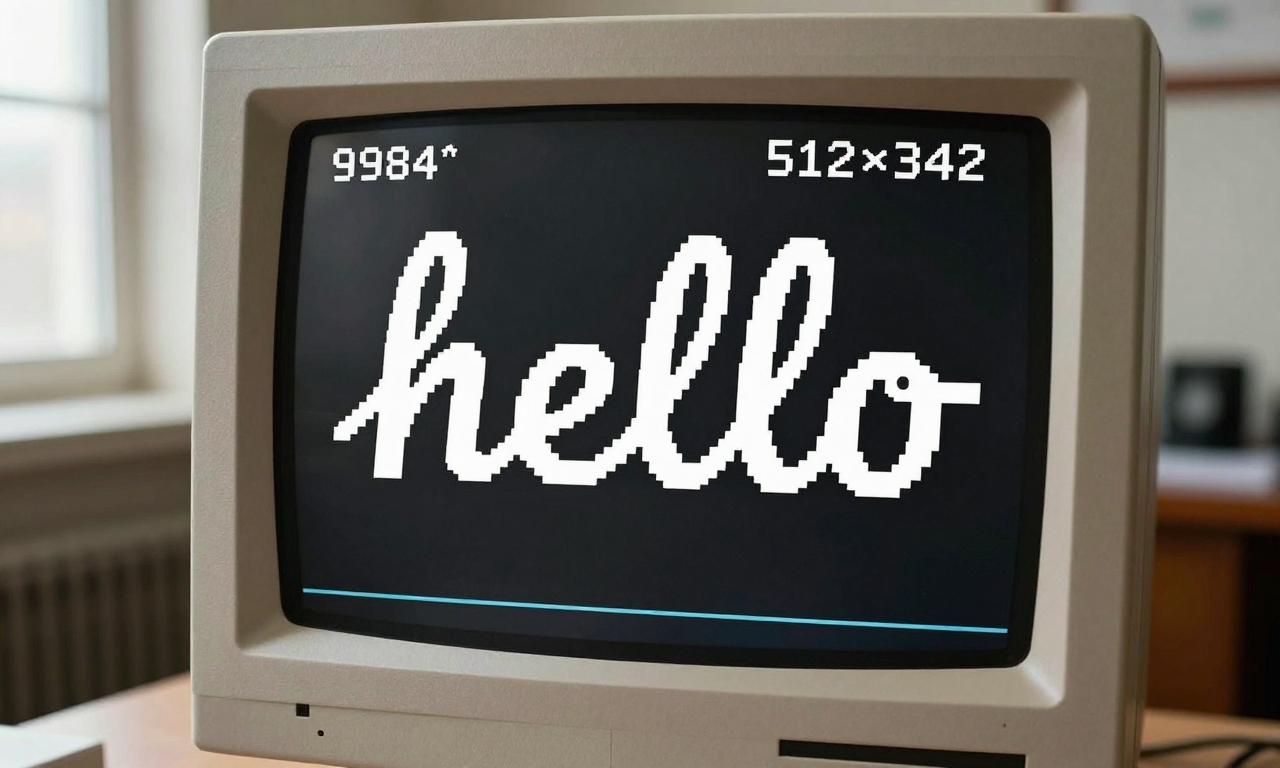
Kare, who would later become famous for creating many of Apple’s early icons and fonts, was tasked with designing the startup screen. She created a cursive “hello” using pixel art-a digital art form where images are created pixel by pixel. At a time when computer displays had extremely limited resolution (the original Macintosh had a 512×342 pixel display), every pixel mattered.
“The ‘hello’ was meant to be warm and inviting,” Kare later explained. “We wanted people to feel like the computer was greeting them personally, not presenting a cold, technical interface.” This approach contrasted sharply with competitors’ startup screens, which typically displayed technical information or corporate logos.
Why Cursive Mattered
The choice of cursive handwriting was deliberate and revolutionary. In the early 1980s, most computer interfaces used blocky, monospaced fonts that prioritized technical readability over aesthetic appeal. Apple’s cursive “hello” signaled a fundamental shift:
- Human Connection: Cursive handwriting feels personal and human, unlike mechanical type
- Approachability: The flowing letters suggested ease of use and friendliness
- Artistic Statement: It demonstrated that computers could be artistic tools, not just calculators
From Pixel Art to Global Welcome: The Technical Evolution
As Apple’s product line expanded from Macintosh to iPhone, iPad, and beyond, the “hello” greeting had to evolve technically while maintaining its friendly character. This journey reveals fascinating challenges in digital typography and user experience design.
The Pixel Art Challenge
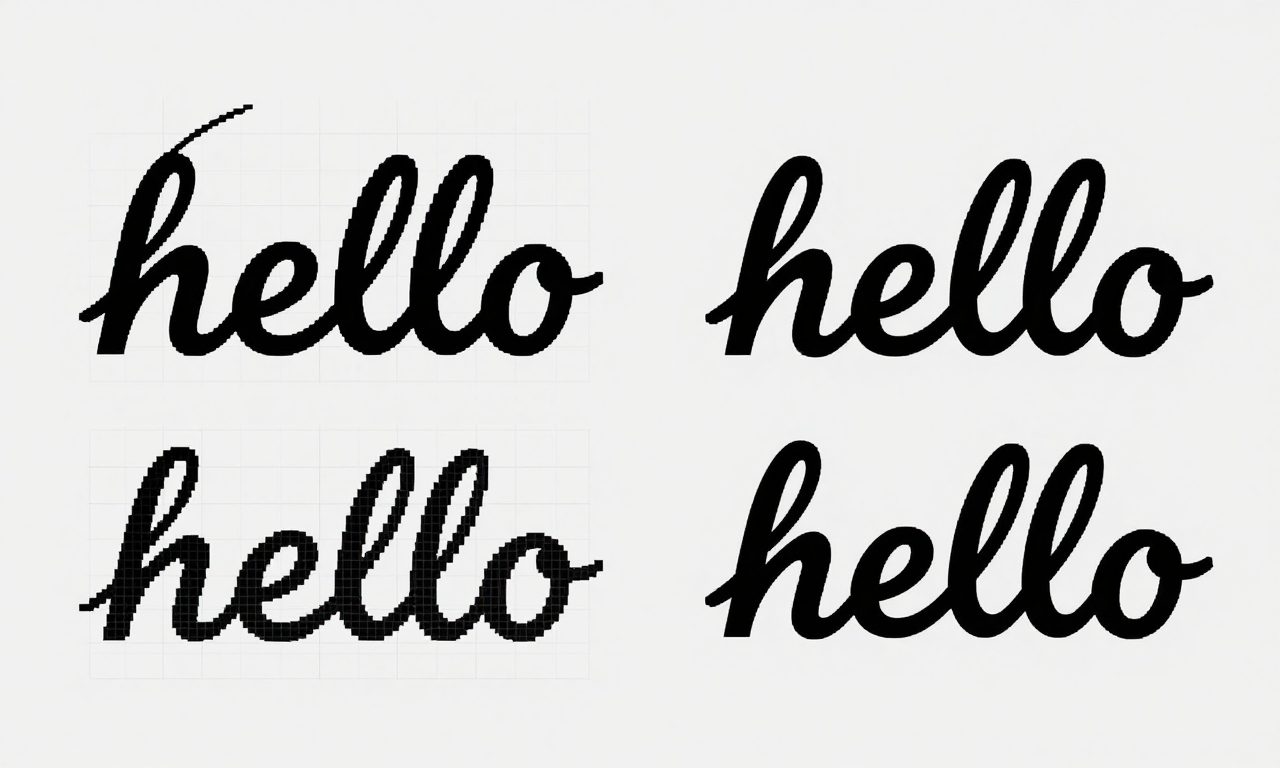
In the early days, creating cursive typography on computers was incredibly difficult. Unlike block letters that can be represented with straight lines, cursive requires smooth curves and connections between letters. With limited pixel resolution, designers had to make creative compromises:
- Pixel Placement: Each pixel had to be carefully placed to suggest curves and connections
- Limited Colors: Early displays supported only black and white, requiring careful contrast management
- Resolution Constraints: The low resolution meant designers had to imply detail rather than show it explicitly
These constraints forced designers to think like digital pointillists, using individual pixels to create the illusion of continuous lines and curves.
The Vector Revolution
The introduction of vector-based typography systems like PostScript and TrueType transformed what was possible with digital fonts. Instead of being defined by fixed pixels, vector fonts use mathematical equations to describe letter shapes:
| Technology | Curve Type | Advantages | Impact on Cursive |
|---|---|---|---|
| PostScript | Cubic Bézier curves | Smooth scaling, printer compatibility | Better curve control for flowing letters |
| TrueType | Quadratic Bézier curves | Better screen rendering, hinting systems | Improved legibility at small sizes |
| OpenType | Advanced features | Unicode support, contextual alternates | Seamless letter connections, multiple languages |
These advancements meant that Apple’s “hello” could now scale beautifully to any display size while maintaining its distinctive character. The hinting systems in TrueType were particularly important for ensuring the greeting remained legible on everything from the original Macintosh to modern Retina displays.
The Modern iPhone Experience: A Multilingual Welcome
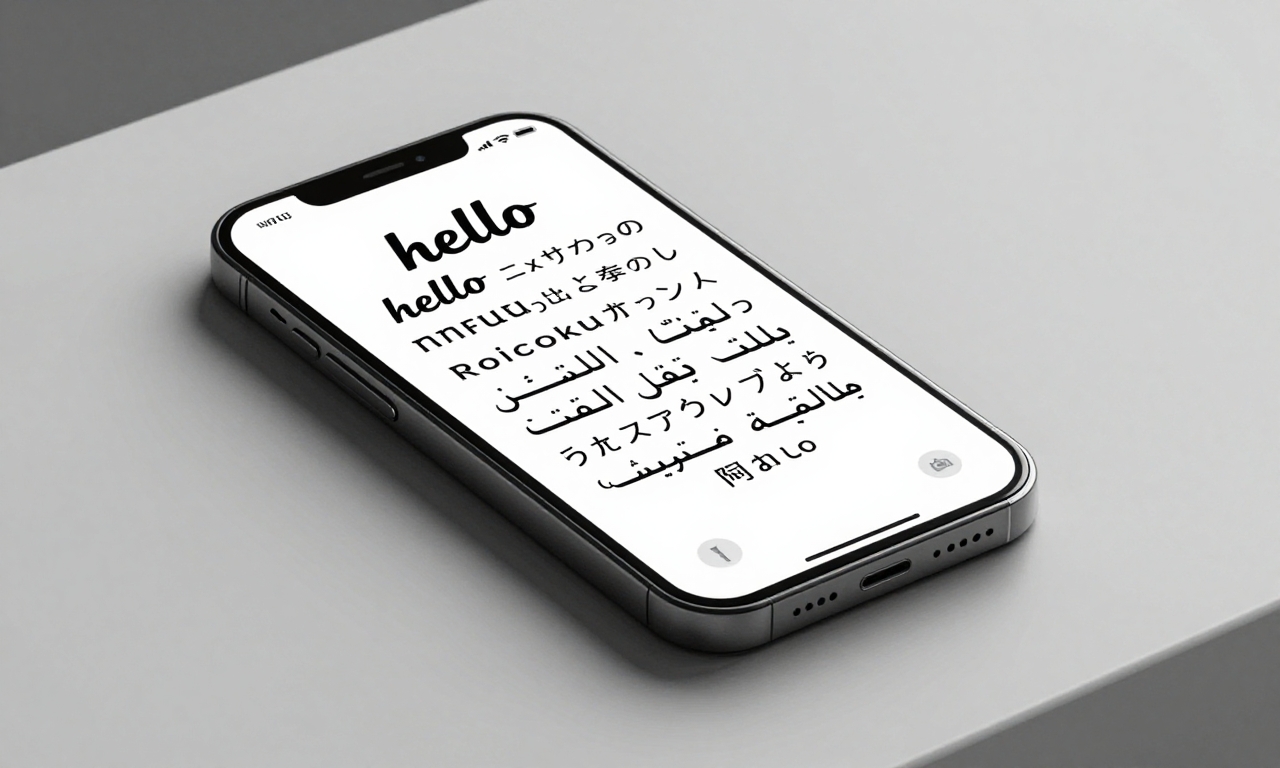
Today, when you set up a new iPhone, you experience the evolution of Apple’s greeting philosophy in its most sophisticated form. The “hello” now cycles through multiple languages, welcoming users in their native tongue while maintaining the friendly, cursive aesthetic.
This multilingual implementation represents both technical achievement and cultural sensitivity. Apple’s design team had to ensure that:
- Cultural Appropriateness: Each language’s greeting feels authentic and respectful
- Technical Consistency: The cursive style works across different writing systems
- Visual Harmony: The transitions between languages are smooth and aesthetically pleasing
The result is a welcoming experience that feels both globally aware and personally tailored-a perfect reflection of Apple’s approach to user experience.
Technical Implementation Challenges
Creating a seamless multilingual cursive experience presented unique challenges:
- Script Compatibility: Not all writing systems work well with cursive connections
- Character Recognition: Ensuring each language’s “hello” remains instantly recognizable
- Animation Smoothness: Creating fluid transitions between different character sets
Apple’s solution involves sophisticated OpenType features and custom animation algorithms that maintain the greeting’s friendly character across linguistic boundaries.
Pixel Art’s Artistic Legacy: Beyond Technical Constraints
The story of Apple’s “hello” greeting connects to broader artistic traditions that find beauty in limitation. Pixel art, despite its technical constraints, belongs to a rich lineage of artistic techniques that use discrete elements to create continuous impressions.
Historical Parallels
Pixel art shares fundamental principles with several traditional art forms:
- Mosaics: Using small, discrete tiles to create larger images
- Pointillism: Applying individual dots of color that blend in the viewer’s eye
- Cross-stitch: Creating images through carefully placed stitches on a grid
Like these traditional forms, pixel art requires artists to work within strict constraints while still expressing creativity and emotion. The limited palette and resolution force artists to be more deliberate and creative with their choices.
The Retro Gaming Renaissance
The constraints that challenged early computer artists became virtues in retro gaming. Modern indie game developers often choose pixel art not because they have to, but because they want to:
“Pixel art forces you to focus on what’s essential. When you only have a few pixels to work with, every pixel has to earn its place. This constraint breeds creativity and forces clarity of expression.” – Modern indie game developer
This artistic philosophy mirrors Apple’s original approach with the “hello” greeting: using limitation as a catalyst for creative expression.
Why Apple’s ‘Hello’ Still Matters Today
In an era of increasingly sophisticated technology, Apple’s simple “hello” greeting remains surprisingly relevant. Its enduring appeal teaches us important lessons about user experience design and technological progress.
User Experience Philosophy
The greeting embodies several key principles that still guide Apple’s design approach:
- Human-Centered Design: Technology should feel approachable and human
- Emotional Connection: First impressions matter in building user relationships
- Attention to Detail: Even small elements contribute to overall experience
These principles explain why, nearly 40 years later, Apple still begins its user relationships with a friendly “hello.”
Technological Progress vs. Human Needs
The evolution of the “hello” greeting demonstrates that technological advancement doesn’t always mean abandoning what works. Sometimes, it means preserving and enhancing successful elements:
- Preservation of Intent: Maintaining the friendly, approachable character
- Technical Enhancement: Improving rendering while keeping the aesthetic
- Global Adaptation: Expanding reach while maintaining core identity
This balanced approach to innovation-respecting what works while embracing what’s possible-has become a hallmark of Apple’s product philosophy.
Conclusion: The Enduring Power of Simple Greetings
Apple’s “hello” greeting represents more than just a startup screen-it’s a statement about how technology should interact with people. From Susan Kare’s original pixel art to today’s multilingual iPhone welcome, this simple word has carried a consistent message: technology should be friendly, approachable, and human-centered.
The technical journey from bitmap fonts to vector typography to sophisticated OpenType features shows how artistic vision can drive technological innovation. Meanwhile, the greeting’s connection to broader artistic traditions reminds us that creativity often flourishes within constraints.
As we look toward future gadgets and interfaces, Apple’s “hello” serves as a valuable reminder: no matter how advanced our technology becomes, the human elements-warmth, approachability, personal connection-remain essential. Sometimes, the most sophisticated user experience begins with the simplest of greetings: hello.
At Future Gatgets, we believe understanding these design stories helps us appreciate not just what our devices do, but how they make us feel. And in an increasingly digital world, that emotional connection might be the most important feature of all.